
Milan, 19 November 2026–During the 25th Altagamma Observatory, the latest studies—the Altagamma-Bain Worldwide Luxury Market Monitor 2026 and the Altagamma Consensus 2027—were presented, outlining global trends in high-end consumption.
In 2026, the global luxury market held steady, reaching €1,500 billion, with experiences driving consumption.
Looking ahead to 2035, the global luxury market is projected to be worth between €2,200 and €2,600 billion, corresponding to an average annual growth rate of 4–6%. In the short term, the 2027 baseline scenario for luxury personal goods indicates potential growth of 0 to 4%, with the outlook dependent on the recovery of demand.
In 2026, the global market remained stable, ranging from 0% to +2% compared to 2025, despite international tensions and macroeconomic uncertainties.
Among the new market trends, experiential luxury grew between 2% and 4%, while personal goods saw a moderate recovery (+1/3%).
Experiences are on the rise, driven by hospitality, fine dining, boating, and cruises, while personal goods are regaining ground moderately, supported primarily by high-end customers.
Luxury is steadily expanding its scope: alongside traditional goods and experiences, wellness, longevity, preventive care, personalized health, entertainment, and new forms of belonging are gaining attention. Increased longevity and the possibility of living longer in good health open up opportunities across generations, reinforcing the role of well-being in shaping value propositions.
The secondhand market is also accelerating, confirming the growing focus on lasting value.
The number of consumers remained stable at 450 million worldwide, but many are reorienting their consumption choices toward experiences, well-being, and longevity. For 2027, among product categories, jewelry (+6%) and cosmetics (+5%) will lead growth.
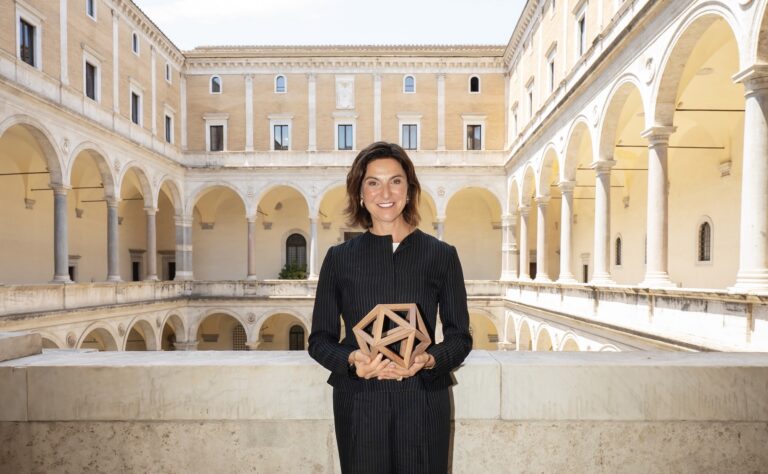
“The global luxury market is expected to remain stable in 2026, exceeding €1,500 billion, despite international tensions. But behind this stability, the market is undergoing profound changes: experiential luxury is growing by up to 4%, driven by hospitality, fine dining, boating, and cruises, while personal goods are recovering moderately, thanks mainly to high-end customers,” commented Giovanna Vitelli, president, Altagamma.
“The number of luxury customers is not decreasing overall—about 450 million worldwide—except for those purchasing personal goods: we’re seeing a shift toward new forms of consumption, particularly experiences, wellness, and longevity. Luxury today is no longer just about ownership, but also about experience,” said the president.
“This transformation highlights the strength of the Italian lifestyle: the world doesn’t just want to buy ‘Made in Italy’—it wants to experience Italy. With Altagamma, we aim to turn this opportunity into growth for the country by supporting businesses in international markets and investing in the training of young people and the transmission of the skills that make our know-how unique,” concluded Vitelli.
For 2027, the Altagamma Consensus forecasts a selective recovery, with India (+6%) and North America (+5%) among the most dynamic markets, followed by the Middle East (+4.5%), Asia (+4%), Europe (+3%), and China (+1%). Among product categories, jewelry (+6%) and cosmetics (+5%) lead the growth forecasts.
North America is the main driver of growth, with a 5% increase, supported by strong financial markets, spending by high-net-worth clients—even in secondary cities—and a propensity for international travel. Aspirational consumers remain more vulnerable.
India, growing by +6%, is among the most dynamic markets and benefits from the expansion of the high-spending population and the younger generations.
Opportunities linked to trade liberalization and the evolution of distribution coexist with the still-limited availability of suitable retail space.
The Middle East maintains a positive outlook despite geopolitical risks, posting growth of +4.5%. The United Arab Emirates remains a magnet for high net worth individuals, while the Saudi market continues to develop.
In Asia, excluding China (+%), South Korea is holding steady, Singapore reaffirms its role as a luxury hub, and Thailand, Vietnam, and Indonesia are showing growing potential.
In Europe, local consumer spending remains cautious (+3%). The market is supported by high-spending customers and international tourist flows, despite the backdrop of economic uncertainty.
China grows by just +1%, amid real estate challenges and declining consumer confidence.
Among the various product categories, jewelry posted a 6% increase and emerged as the most dynamic sector, thanks to the appeal of fine jewelry and branded jewelry, as well as the search for lasting value.
Cosmetics (+5%) follow, driven by fragrances, skincare, wellness, longevity, and technological innovation.
Watches (+3.5%) benefit primarily from selective demand for iconic models and high-quality craftsmanship.
For apparel (+3%), the creative renewal of fashion houses could reignite interest in a market polarized between absolute luxury and the aspirational segment.
The recovery in leather goods (+2.5%) and footwear (+2%) is more moderate, as these sectors must win back price-sensitive customers and face competition from new brands, sportswear, and the secondhand market.
The secondhand luxury market continues to expand and is projected to reach an estimated value of approximately €202 billion by 2026, with growth of 4–6%. Between 2019 and 2025, the sector recorded an average annual growth rate of 7–8%, three to four times faster than the primary market.
Affordability, collecting, the search for authenticity, and the rediscovery of brand archives are fueling interest in pre-owned goods.
By Maria Cristina Pavarini