
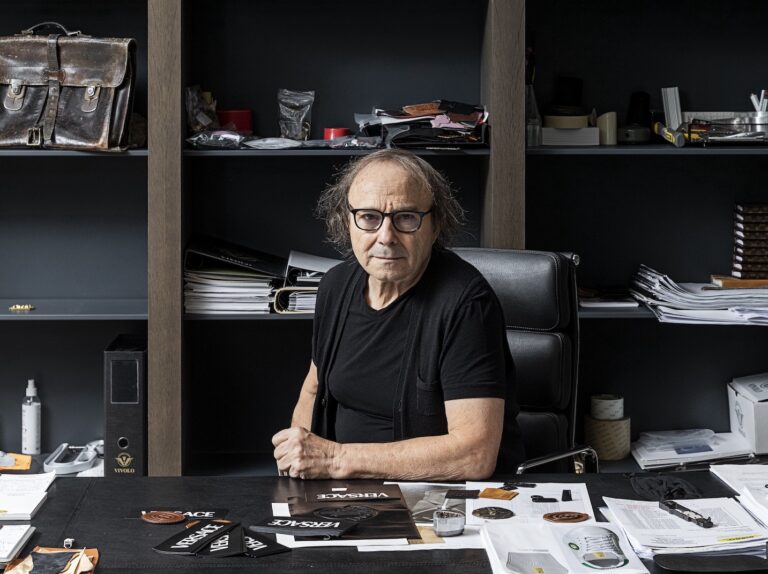
Milan, 3 November 2026–Luciano Vivolo, a visionary Italian entrepreneur, has published his biography on the eve of the 50th anniversary of his company, which specializes in leather labels and accessories for fashion brands. Il genio creativo (The Creative Genius), from Rizzoli, has just hit bookstores and tells the story of a family, an industry, and its tireless founder. By inventing the leather patch, he transformed the label from an accessory into a distinctive symbol and a tool for communicating a brand’s value and identity.
Why did you write this book?
I wanted to tell my story. I was born in Bagnoli Irpino, near Naples. I moved to Bologna in search of new opportunities. Then I founded Vivolo nearly 50 years ago, in 1977, in San Lazzaro di Bologna, almost by chance, as a solution to a small household problem.
How did it all start?
Today we operate out of a 10,000-square-meter facility. Our headquarters is a glass cube surrounded by trees. We have about 100 employees, produce roughly 15 million pieces a year, and generate about €16 million in annual turnover, but it all began in the 1970s. I held various jobs to make ends meet. One evening, I cut patches from scrap leather to cover a hole in the knee of my son’s preschool onesie. Many people liked the idea right away. At first, I sold the patches to sewing and notions shops for 1,000 lire a pair, but I owe my success to Angelo Rizzoli…
Tell us about it…
To promote my leather patches, I sent a pair to Angelo Rizzoli. I met him on Via Solferino, at the headquarters of Corriere della Sera, and proposed that he buy them as giveaways for the women’s magazine Amica. He placed an order for two million patches at 1,000 lire a pair. That order was worth two billion lire (which is why I chose Rizzoli to publish this book).
From early upcycling to fashion…
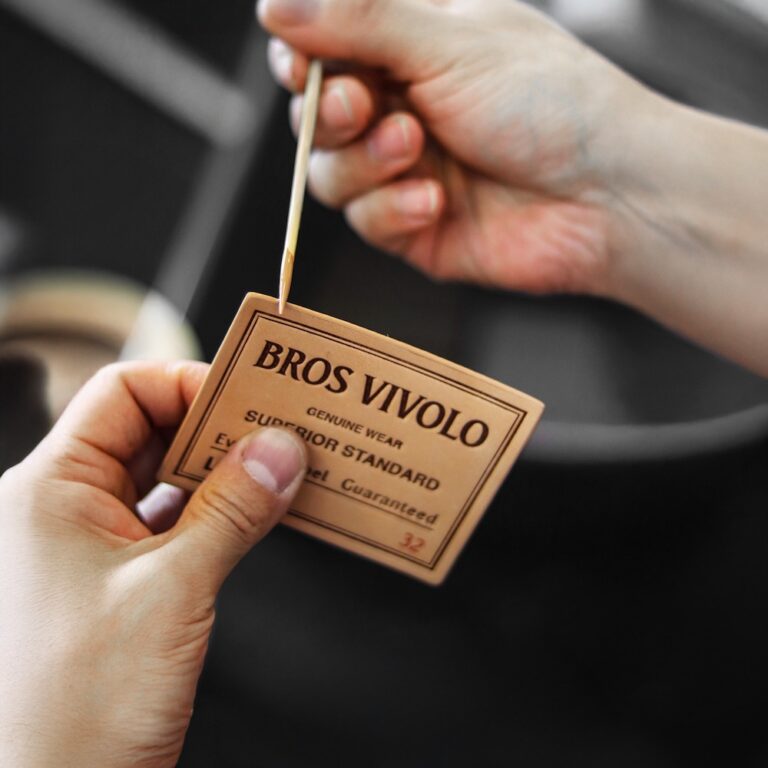
Exactly. Then I started producing leather labels as well, and I haven’t stopped since. We’ve stayed true to our core values of minimizing waste and caring for the environment. We use only vegetable-tanned leather—no chromium. We hold numerous certifications and will soon earn LWG Gold certification as well, which marks excellence in leather processing. And unlike many in the industry, we produce almost everything in-house and finish each label by hand.
Who are your customers?
All the major brands—from luxury giants to denim and sportswear brands, all the way to fast fashion—although denim accounts for 70% of sales. We sell all over the world, and exports account for 70% of sales.
For us, attention to detail is paramount—almost obsessive. We offer only the highest-quality leather labels because the label defines the product’s value. Whether it’s a pair of jeans that sells for €150 or one that costs €3,000, the label is everything. And we use the same care for every label.
Do you use other materials?
We’re constantly experimenting. Two or three years ago, we bet on bamboo and on a fiber made from grapes, but leather remains our core business. We also recycle our leather scraps: we shred them in a hopper and mix them with special resins. The result is a material we can use to make chairs and coffee tables.
How do you conduct your research?
We travel all over the world twice a year. It’s important for us to be curious, to understand what’s on the market, and to never stop. We also have a huge, fully digitized archive where we keep samples of our entire production. But the real driving force behind our company is creativity. As I say in my book, if an idea comes to mind, I don’t set it aside for tomorrow. I explore it, verify it, and research it—that’s how I instill a certain work ethic throughout the company. The same goes when a customer makes a specific request. The answer is always, “Yes, we can do it.” We will find a way to reach the goal. Above all, though, we know how to spark our clients’ desires, pique their curiosity, and surprise them.
Are you thinking about a generational transition?
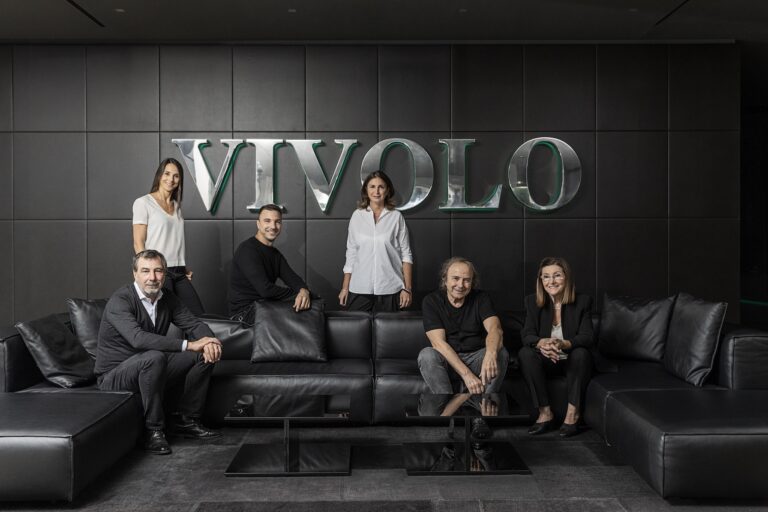
My four children—Salvatore, Eloise, Luciana, and Matteo—all work in the company already and have taken on important responsibilities. We didn’t plan the process in advance. Each of them has slipped into the flow of our growth by following their natural inclinations.
I feel at ease having them by my side. After all, I’ve never thought about selling to a private equity firm and retiring to the Maldives, and I never will—besides, they no longer even come to ask me, because they know it’s a waste of time.