
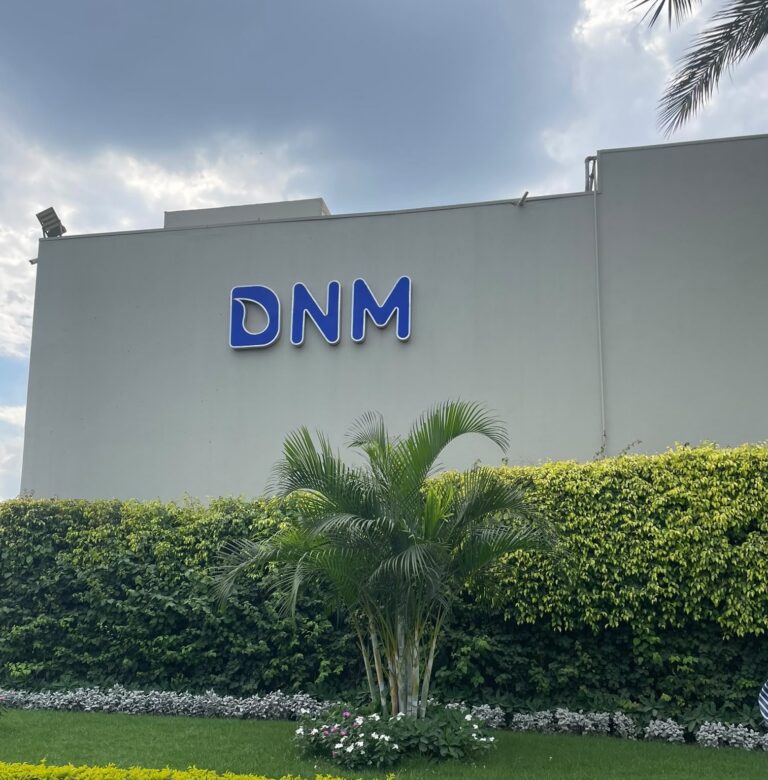
Damietta, 12 October 2026–A few days ago I visited DNM, a 100% Turkish-owned investment of Eroğlu Global Holding. The specialized denim manufacturer has operated uninterruptedly for 15 years in Damietta, Egypt, paving the way for the growth of the denim and jeans sector that has expanded significantly in this country in recent years.
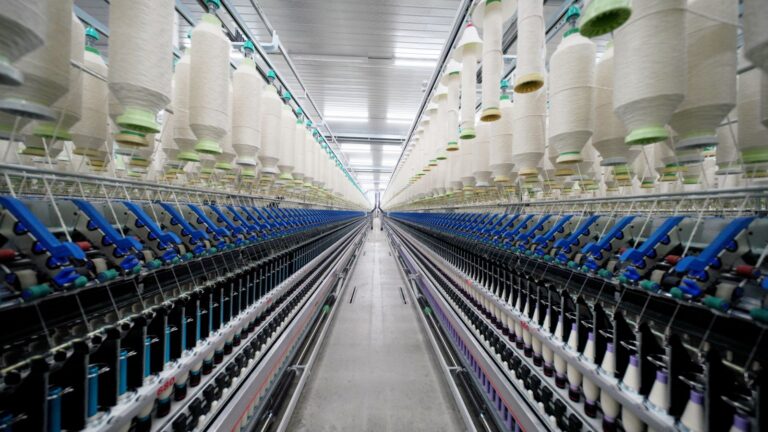
As it prepares for celebrating this milestone, it is evident how much passion for denim drives the company. Walking through the fully integrated, 150,000-square-meter manufacturing hub, I saw an extremely modern, efficient and responsibly managed facility, covering the entire process from raw material to finished product.
“We are DNM. As our name says, denim has been our focus for the last 15 years. That’s what we care about,” explained Gökhan Ünsal, general manager, while presenting the company and disclosing some details about the upcoming bash.
The anniversary will apparently be celebrated with a low profile, as no big parties are planned. “We will meet our clients during dedicated occasions within the upcoming appointments,” explained Ünsal, referring to a series of catered events taking place very soon. The first will be held on 13 October, on the eve of Kingpins Amsterdam, with selected Dutch clients. A second will follow during Denim Première Vision in Milan next November, among others.
“DNM’s ownership and organization are 100% Turkish. Our head offices and sales department are in Istanbul, while production is here in Egypt for geographical reasons,” he added, stressing that the factory employs 2,300 people.
With an annual denim fabric production capacity of 42 million meters, a new milestone achieved thanks to recent investments, DNM serves leading international jeans brands and fashion retailers, offering flexible service and made-to-order fabrics and solutions. The company closed 2025 with US$150 million in revenues.
Efficiency goes hand in hand with environmental responsibility and no waste of resources. Solar panels produce on average 15% of the energy used, and a gas cogeneration system generates electricity and heat at the same time.
Water use is also kept to a minimum. “At DNM, we recycle approximately 90% of our wastewater. Our daily water consumption is around 2,500 m³, equivalent to an Olympic-sized swimming pool with a depth of two meters,” he explained, pointing to the company’s redesigned logo: a capital “D” whose central blank space is shaped like a water drop.
“In this regard, we are in line with Egyptian practices and laws, which are extremely careful to safeguard the health of their water resources.”
The production process follows a single path, from cotton mixing to storage of the finished fabric, with no backtracking or extra movement. “Every manufacturing step follows the other. This way we don’t waste resources, energy and time, and the goods always move forward until they are ready for their final destination.”
DNM was founded in 2011 as an offshoot of Eroğlu Global Holding, one of Turkey’s long-established family-owned companies, established by Nurettin Eroğlu in 1983. Although the group started out in textiles, today it operates across a wide range of industries, including real estate, energy, furniture, shopping malls and retail. Overall it counts ten companies and approximately 10,000 employees.
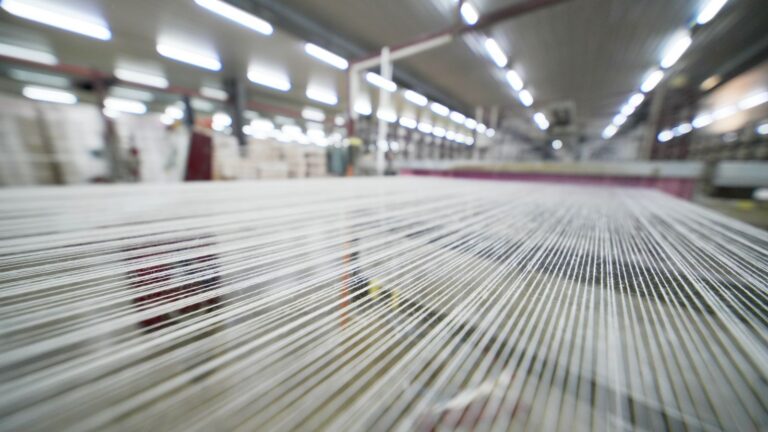
DNM’s products are essential and streamlined, focused mostly on 3/1 right-hand denim. “At present, we don’t produce left-hand or selvedge denim. We don’t offer broken twill or flat fabrics, but a vast array of denims in different weights and colors, mostly upon our clients’ requests,” adds the manager.
The range of raw materials, instead, is varied. The company prefers organic and regenerative cotton, either 100% or blended with more precious fibers such as silk and cashmere, and with other sustainable fibers. About eight years ago it also developed a capsule collection of denims made with a percentage of Giza cotton, the most prized Egyptian cotton. “It is mostly used for high-end shirting and doesn’t fit the needs of jeanswear, but we wanted to test it, too.”
It also uses thermoregulating and stretch fibers, for instance from Lycra and Hyosung, increasingly in bio-based variants, in keeping with market demand and with upcoming EU environmental regulations.
Right now DNM sells more rigid fabrics than stretch ones. “We think comfort is one of the strongest requests at the moment, and even if people speak of a return of skinny, it will not be as it used to be, as only a few men can wear super-stretch denim,” he underlines.
The company offers around 70-75 fabric variants per season and constantly focuses on developing new fibers and material blends. Its S/S 2028 collection reflects 15 years of evolution in addressing diverse customer needs, from authentic denim looks to smooth and soft textures, from lightweight to heavy-weight fabrics. Among the newest colors are green tones in matcha and matsu blue, alongside a sand blue that gives the fabric an inherently colored appearance.
Its success rests on competence, great technicians and workers, and a constant ability to innovate, but also on producing in Egypt. “Many denim industry insiders are now looking at Egypt as the country where they can produce and operate. DNM was the first to do it. All others arrived after us, including Denimandjeans,” he added, referring to the global show organizer that will hold its denim-focused show in Cairo for the third time in January 2027.
“We advised its organizer, Sandeep Agarwal, to hold his denim show here, instead of Turkey, where he initially wanted it to take place,” added Ünsal, implying that various Turkish denim companies are struggling.
Egypt can count on more than 6,000 years of expertise, abundant skilled labor at reasonable cost, and a steady flow of foreign skills and investments. Its geographically strategic position, easy to reach from many parts of the globe, is another case in point, along with duty-free or duty-low access to many markets, including the EU, the US and the Middle East.
After 15 years, DNM’s next chapter will be written the way the first was: with denim at its heart, with its people and partners, and the care for the resources it takes to make it. –by Maria Cristina Pavarini